Dispatch No. 04 · Disney & TV
Before the Tower: The TV Show Behind Disney's Most Famous Elevator
Long before Disney built a haunted hotel around it, Rod Serling created a television series that would influence generations of entertainment.
 By Nicholas Kiley
8 min read
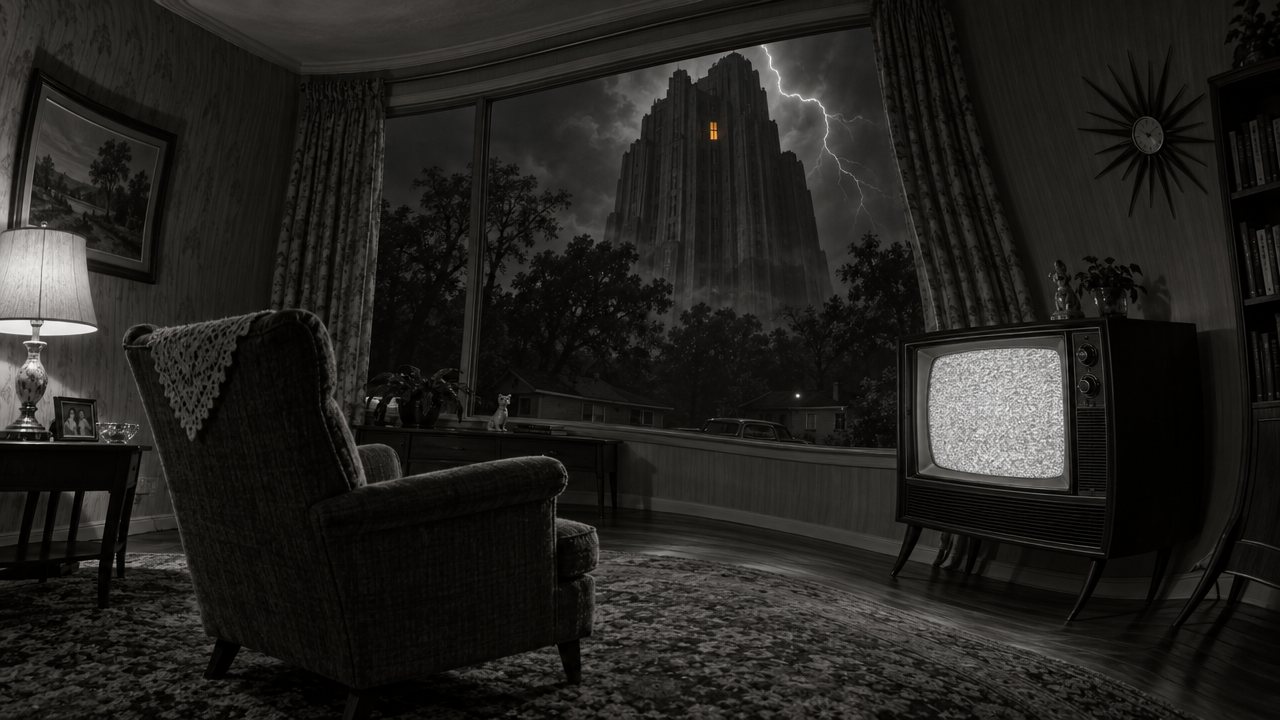
Every day at Disney's Hollywood Studios, thousands of guests enter the Hollywood Tower Hotel, wander through its abandoned lobby, and eventually find themselves standing in a darkened library.
A television flickers to life. Rod Serling appears. And before long, you're boarding an elevator with a remarkably questionable safety record.
Welcome to The Twilight Zone.
Tower of Terror is one of Disney Imagineering's greatest attractions. But I wonder how many people experiencing it actually know much about the television series behind it.
Because long before Disney started dropping tourists down elevator shafts, Rod Serling was changing television.
Television Enters Another Dimension
When The Twilight Zone premiered on CBS on October 2, 1959, American television was filled with Westerns, family sitcoms, and variety shows.
Serling had something else in mind.
Every episode introduced a different story, usually involving ordinary people confronting something extraordinary. Aliens, time travel, mysterious towns, supernatural objects, or a reality that suddenly stopped making sense.
In a way, Serling was doing for television what Salvador Dalí did for painting: taking ordinary things, like a clock, a quiet street or a bus ride, and making them just wrong enough to stick with you. Dalí even made it to Disney once.
And the endings? Let's just say things didn't always work out for the people involved.
Across five seasons and 156 episodes, the series explored science fiction, horror, suspense, and human nature.
Serling was particularly interested in subjects like prejudice, paranoia, conformity, and nuclear war. Science fiction allowed him to tackle issues that television networks and advertisers weren't always comfortable addressing directly.
Sometimes the monsters were aliens.
Sometimes they were the people next door.
And sometimes the people next door were aliens, which makes neighborhood watch considerably more complicated.
The Show That Was Everywhere
I was born in 1984, twenty years after the original series ended. But I enjoyed watching The Twilight Zone as a kid.
And it's remarkable how much of the entertainment I grew up with followed a similar storytelling tradition.
Take Tales from the Crypt.
Rod Serling and the Crypt Keeper weren't exactly interchangeable hosts. One was a sharply dressed writer with a cigarette and a commanding voice. The other was a decomposing skeleton who seemed delighted whenever somebody died horribly.
Different management styles.
But both shows understood the appeal of a self-contained story with a memorable twist.
The X-Files would later explore paranormal mysteries, conspiracies, and the possibility that reality was considerably stranger than anyone wanted to admit.
And then there's The Simpsons.
Remember Bart seeing a gremlin attacking the school bus in Treehouse of Horror? That's a parody of the famous Twilight Zone episode “Nightmare at 20,000 Feet,” starring William Shatner.
The murderous Krusty doll? Another reference, this time to “Living Doll.”
And those supposedly helpful aliens with a cookbook? That's a nod to “To Serve Man.”
If you grew up watching The Simpsons, you were probably getting a lot more Twilight Zone than you realized.
A Little Peace and Quiet. And Nuclear Annihilation.
One episode I distinctly remember frightening me as a kid wasn't even from the original series.
It was “A Little Peace and Quiet,” from the 1985 revival of The Twilight Zone.
The story follows a woman who discovers she can freeze time. Pretty fantastic superpower, honestly. Imagine skipping traffic, avoiding awkward conversations, or never waiting in another checkout line.
But the story takes a much darker turn when nuclear war becomes imminent.
She freezes time just as a missile is about to strike, leaving her facing an impossible choice.
That episode scared the hell out of me.
Not because of monsters or ghosts, but because the threat felt real. Nuclear war wasn't something invented for television. It was a genuine concern during the Cold War.
The episode took something terrifying about the real world and made it personal.
And here's a fun detail: it was directed by Wes Craven, the filmmaker behind A Nightmare on Elm Street and Scream.
Apparently, giving people nightmares was a pretty steady career.
The Twilight Zone Gets a Smartphone
Fast-forward to Black Mirror, a modern anthology series that explores similarly uncomfortable questions through technology.
Consider “Nosedive,” the 2016 episode starring Bryce Dallas Howard.
In this world, everyone rates everyone else, and those scores determine your opportunities and social standing.
Imagine your Uber rating determining whether you qualify for a mortgage.
Sounds ridiculous, right?
Until you consider how much modern life already revolves around likes, followers, reviews, and online approval.
That's the kind of premise The Twilight Zone made famous: take something recognizable, push it into absurd territory, and make audiences wonder whether it's really all that absurd.
Rod Serling probably would have had a field day with social media.
Time Enough at Last
Recently, I watched “Time Enough at Last,” one of the original series' most celebrated episodes.
It stars Burgess Meredith as Henry Bemis, a bank teller who loves reading but never seems to have enough time for it.
Without spoiling anything, the story combines nuclear catastrophe, loneliness, and a particularly cruel piece of irony.
It originally aired in November 1959.
Nearly seventy years later, people are still recommending it.
And here's where things come full circle with Disney.
Disney Checks Into the Twilight Zone
I first rode Tower of Terror in 1995, when Disney's Hollywood Studios was still called Disney-MGM Studios.
And I remember the experience being different.
Turns out, I wasn't imagining it. When the attraction opened in July 1994, it featured a single massive drop. Disney added a second in 1996, a third in 1999, and eventually introduced the randomized sequences guests experience today.
Apparently, somebody at Imagineering decided one plunge down an elevator shaft wasn't quite enough.
It's also one of those borderline rides for families. Kids only need to be 40 inches tall, which means plenty of them are tall enough long before they're sure they want to be.
Every parent knows the negotiation. “It's not that scary.” “It's mostly a story.” “You're going to love it.”
Tower of Terror is where that trust gets built or broken. Get it right, and you've got a kid who'll follow you onto anything.
Get it wrong, and you get my niece. She still won't ride a lot of things, because as far as she's concerned, she was misled about Tower of Terror.
She's not entirely wrong.
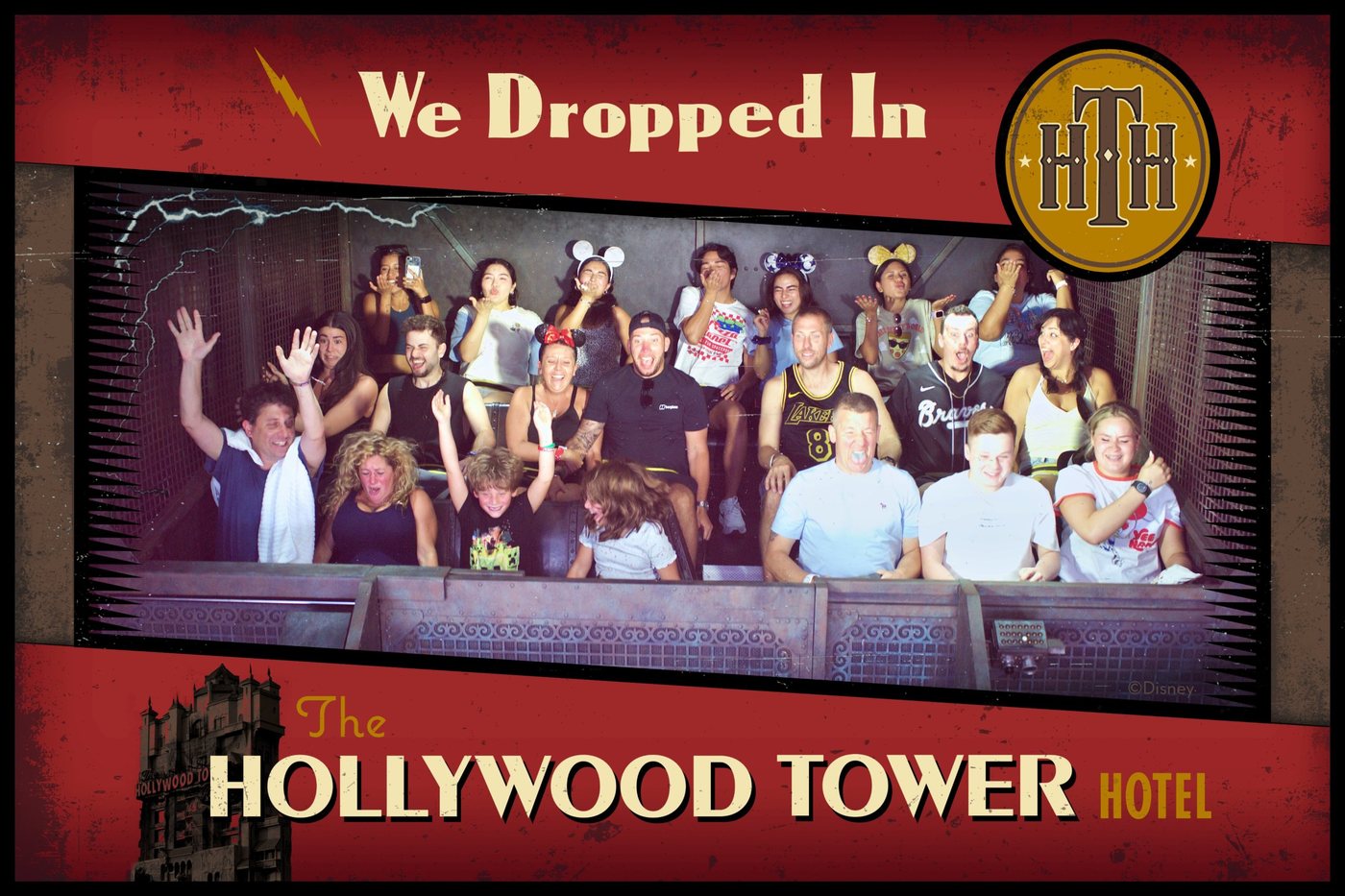
But the attraction's connection to the original television series goes much deeper than its name.
While developing Tower of Terror, Disney Imagineers watched all 156 original Twilight Zone episodes.
At least twice.
That's 312 episodes of research.
I've subscribed to streaming services specifically to watch one show and canceled three months later without finishing the first season.
These people had homework.
And they did more than watch.
Remember those eyeglasses from “Time Enough at Last”? The Imagineers included a reference to them among the props in the hotel's library.
They also faced another challenge: Rod Serling had died in 1975, nearly twenty years before the attraction opened.
To bring him into the story, Disney used actual footage of Serling from the episode “It's a Good Life,” combining it with newly recorded narration by voice actor Mark Silverman. Serling's widow, Carol, approved Silverman's casting.
The result is so convincing that many guests probably assume they're hearing Serling himself.
Rather than creating just another haunted hotel, Imagineering built an attraction that feels like stepping inside a lost episode of The Twilight Zone.
The abandoned lobby, the mysterious disappearances on Halloween night in 1939, the eerie narration, and references to the original episodes all contribute to the experience.
Disney even promoted the attraction with an enormous Tower of Terror billboard along World Drive, complete with an elevator full of terrified passengers and a moving elevator effect. It stood there until 2022.
When Tower of Terror opened in 1994, the original television series had already been off the air for thirty years.
Disney had built one of its most ambitious attractions around a television show from another generation.
Before the Tower, There Was the Zone
If you'd like to explore the original series yourself, you can.
As of October 2026, The Twilight Zone is streaming on Paramount+, with free ad-supported viewing options including Pluto TV, Tubi, and Fandango at Home. Availability and episode selections vary by service.
“Time Enough at Last,” “The Monsters Are Due on Maple Street,” and “Nightmare at 20,000 Feet” are great places to start.
Disney attractions evolve. Stories change, technology advances, and familiar experiences occasionally disappear.
California's Tower of Terror has already become Guardians of the Galaxy – Mission: BREAKOUT!
And someday, the Hollywood Tower Hotel in Florida might tell a different story, too.
But whatever happens to the attraction, The Twilight Zone will always be part of its history.
Rod Serling and the writers, directors, and performers who helped bring his vision to life created something that reached far beyond its original five-season run.
From The Simpsons to The X-Files, from Tales from the Crypt to Black Mirror, you can still recognize elements of the storytelling tradition the series helped establish.
The show could frighten you, make you laugh, challenge your assumptions, and occasionally leave you staring at the television wondering what the hell you'd just watched.
Not bad for a black-and-white television series that premiered in 1959.
So the next time you're standing inside the Hollywood Tower Hotel library, waiting for Rod Serling to appear on that old television, remember that you're experiencing a small piece of entertainment history.
And once those elevator doors close?
Well, you've got other things to worry about.
Sources
- The Twilight Zone Tower of Terror (Wikipedia)
- Why Tower of Terror's Imagineers watched every episode of The Twilight Zone twice (/Film)
- Five things to know about The Twilight Zone Tower of Terror (TouringPlans)
- Walt Disney World's Tower of Terror billboard to be permanently removed (WDWMagic, July 2022)
- “A Little Peace and Quiet” (Wikipedia)
Keep reading
The Guest List
Get the next dispatch first.
New stories, episodes and first looks from inside the tower, straight to your inbox.
No spam. Unsubscribe anytime.